Did you know that arachnids aren't only spiders? There's so many more animals!
Jeff Verges/Owner/Operator
742 Santa Anita Court
Eugene, OR 97401
541-688-0580 Eugene
503-371-8373 Salem


Read more, here.

Poisoned bait is a common method for controlling rats, mice, birds, slugs, snails, ants, cockroaches, and other pests. The basic granules, or other formulation, contains a food attractant for the target species and a suitable poison. For ants, a slow-acting toxin is needed so that the workers have time to carry the substance back to the colony, and for flies, a quick-acting substance to prevent further egg-laying and nuisance. Baits for slugs and snails often contain the molluscide metaldehyde, dangerous to children and household pets.
An article in Scientific American in 1885 described effective elimination of a cockroach infestation using fresh cucumber peels.
Read more, here.

Physical pest control involves trapping or killing pests such as insects and rodents. Historically, local people or paid rat-catchers caught and killed rodents using dogs and traps. On a domestic scale, sticky flypapers are used to trap flies. In larger buildings, insects may be trapped using such means as pheromones, synthetic volatile chemicals or ultraviolet light to attract the insects; some have a sticky base or an electrically charged grid to kill them. Glueboards are sometimes used for monitoring cockroaches and to catch rodents. Rodents can be killed by suitably baited spring traps and can be caught in cage traps for relocation. Talcum powder or "tracking powder" can be used to establish routes used by rodents inside buildings and acoustic devices can be used for detecting beetles in structural timbers.
Read more, here.
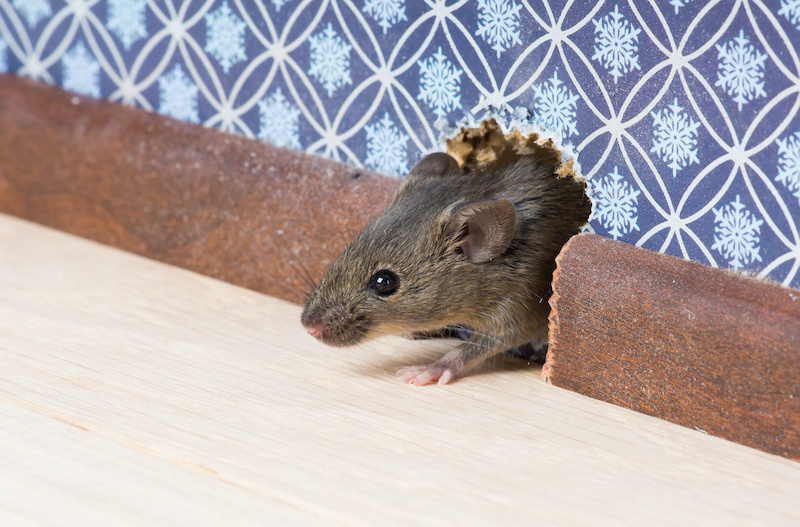
Many unwelcome animals visit or make their home in residential buildings, industrial sites and urban areas. Some contaminate foodstuffs, damage structural timbers, chew through fabrics or infest stored dry goods. Some inflict great economic loss, others carry diseases or cause fire hazards, and some are just a nuisance. Control of these pests has been attempted by improving sanitation and garbage control, modifying the habitat, and using repellents, growth regulators, traps, baits and pesticides.
Read more, here.
